.png)
The Future is Now: What STEM Education Looks Like in 2026
Real talk: STEM education isn't what it used to be, and that's a good thing.
Gone are the days when science and technology learning meant sitting in rows, watching demonstrations, and hoping the lesson stuck. In 2026, we're witnessing a complete transformation of how young people, especially girls and underserved communities, experience STEM. And honestly? It's about time.
If you've been wondering what the future of education looks like, here's the blueprint. Spoiler alert: it's mobile, inclusive, hands-on, and unapologetically real-world focused.
Let's break it down.
Education That Comes to You: The Rise of Mobile Learning
Here's a truth we can't ignore: not every student has equal access to cutting-edge STEM facilities. For years, zip codes determined educational opportunities. But 2026 is rewriting that narrative.
Enter mobile learning, and no, we're not talking about apps on smartphones. We're talking about actual education on wheels.
At STEM Xposure Inc., we've championed this approach through our Skoolie initiative, a converted school bus that brings fully-equipped STEM labs directly into communities. Think about it: instead of waiting for students to find their way to opportunity, we're driving opportunity straight to their doorsteps.
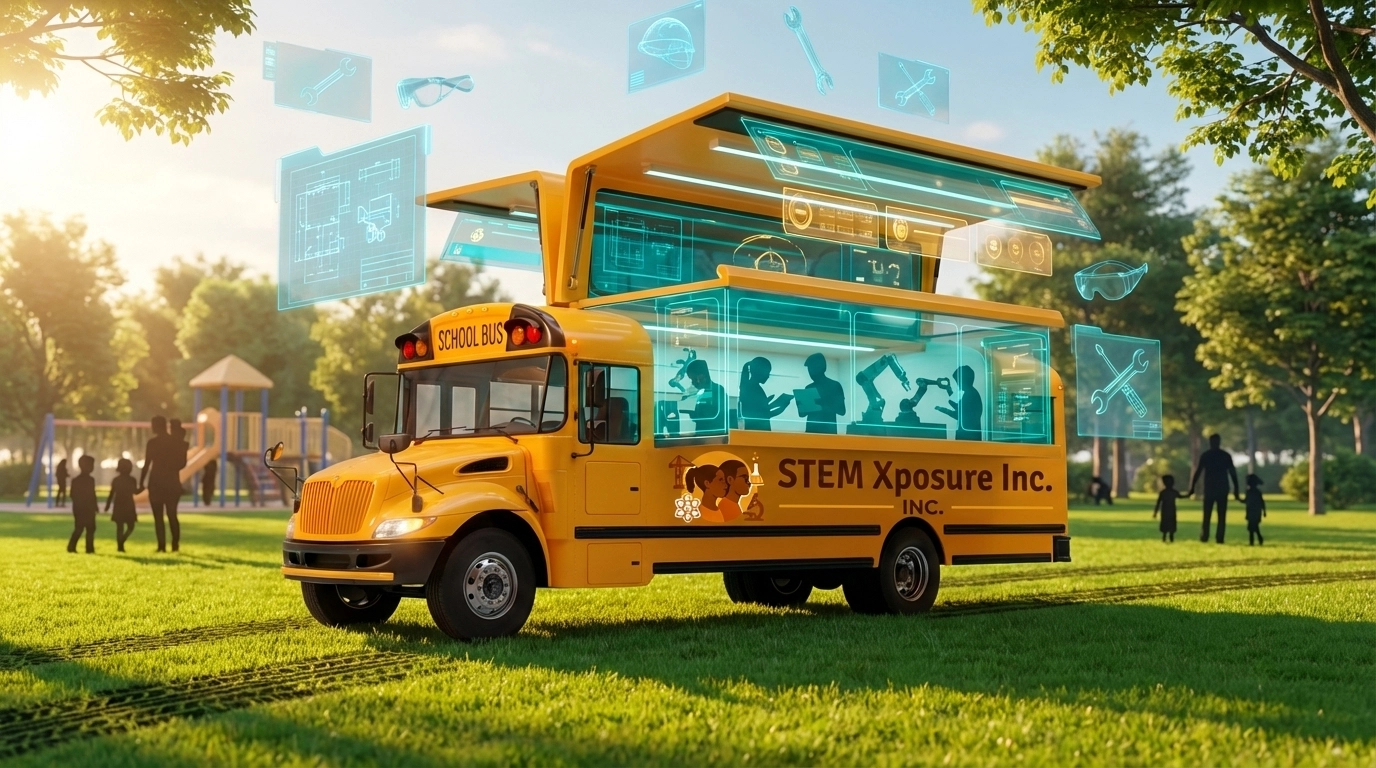
This isn't just convenient, it's revolutionary. When education meets students where they are, barriers crumble. Transportation issues? Solved. Lack of local resources? Addressed. The intimidation factor of unfamiliar environments? Gone.
Mobile learning has become the standard for organizations serious about equity. And the results speak for themselves: higher engagement, increased confidence, and communities that finally feel seen and prioritized.
Breaking Down Barriers: Equity and Inclusion Take Center Stage
Let's be honest with each other for a moment.
For too long, STEM fields have looked a certain way. And for too long, girls, especially Black and brown girls, have received the message (sometimes subtle, sometimes not) that these spaces weren't built for them.
2026 is the year we finally say: enough.
The shift toward universal design and accessibility isn't optional anymore, it's the expectation. Schools and organizations are prioritizing multilingual supports, tactile alternatives to digital tasks, and flexible learning pathways that meet diverse needs. When tools offer multiple entry points, students who might have hesitated before are now diving in with confidence.
But equity goes beyond accessibility features. It's about representation. It's about curriculum that reflects the experiences and contributions of people who look like our students. It's about creating spaces where asking questions is celebrated, not shamed.
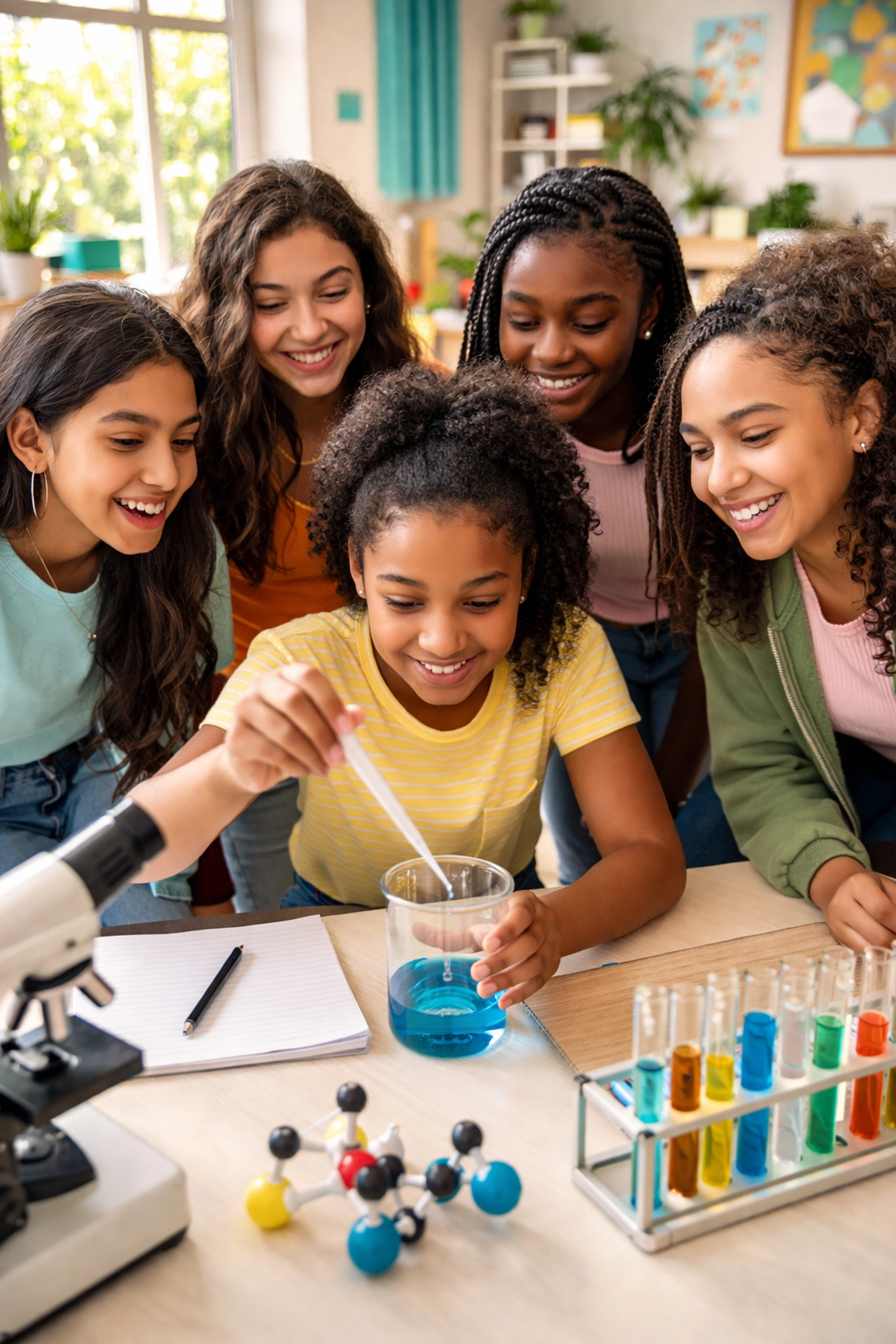
At STEM Xposure Inc., we've made this our mission from day one. Our programs intentionally center girls and underserved communities because we know that when you invest in those who've been overlooked, everyone benefits. Diversity isn't a checkbox, it's our superpower.
STEM Meets Real Life: The Power of Interdisciplinary Learning
Here's where things get really exciting.
Remember when STEM was confined to its own little corner of the school day? Chemistry class. Computer lab. Math period. All separate. All siloed.
Not anymore.
In 2026, STEM education has broken free from those boundaries. It's now woven into literacy, social-emotional learning, project-based experiences, and, yes: even health education and beauty science.
Take our Science of Body curriculum, for example. This program teaches girls ages 10–17 the science behind puberty, hygiene, menstrual health, and product safety. We're talking chemistry (pH balance, ingredient analysis), biology (hormones, body systems), and consumer science (label reading, product safety): all wrapped in relatable, stigma-free instruction.
Why does this matter? Because when young people understand the science of their own bodies, they're not just learning facts. They're building confidence, developing critical thinking skills, and gaining agency over their health decisions. That's STEM with purpose. That's education that sticks.
This interdisciplinary approach reflects a broader truth: real life doesn't come in neat subject categories. The problems worth solving require pulling from multiple disciplines. And when we teach students to think this way early, we're preparing them for the complex challenges ahead.
Industry Partnerships: From Classroom to Career Pipeline
Let's talk about the elephant in the room.
Traditional education has often operated in a bubble: disconnected from the actual industries students might one day join. Students graduate with theoretical knowledge but limited understanding of what careers actually look like or how to get there.
2026 is changing that through intentional corporate-nonprofit collaborations and direct mentorship models.
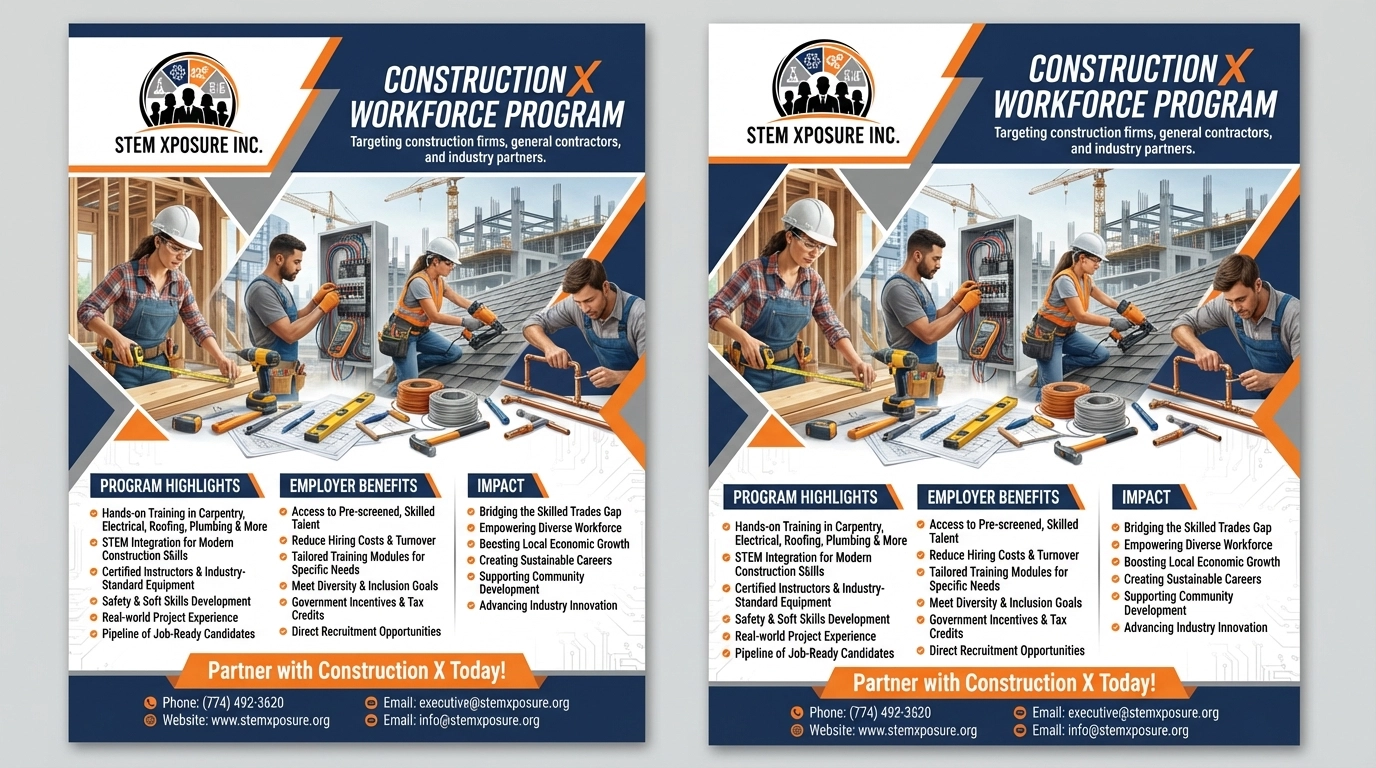
At STEM Xposure Inc., we've built partnerships with academic institutions and industry leaders who don't just write checks: they show up. They mentor. They share their journeys. They open doors.
Our Construction X Workforce Program is a perfect example. Students don't just learn about engineering concepts in abstract terms. They're on actual construction sites, working alongside professionals, gaining hands-on experience in carpentry, electrical work, plumbing, and more. They're seeing firsthand what careers look like and building networks that will serve them for years.
This shift toward direct industry involvement isn't charity: it's smart investment. Companies gain access to diverse talent pipelines. Students gain exposure, mentorship, and real-world skills. Communities gain economic opportunity. Everyone wins.
Hands-On Learning Makes a Comeback
Can we talk about screen fatigue for a second?
After years of increased digital learning, 2026 has brought a refreshing correction: a return to doing rather than just watching.
Research confirms what many educators instinctively knew: students learn best when they're actively engaged, not passively consuming. The progression now follows a tactile-first model: physical exploration before digital work. Students build robots before programming simulations. They mix chemicals in labs before watching videos about reactions. They create with their hands before clicking through modules.
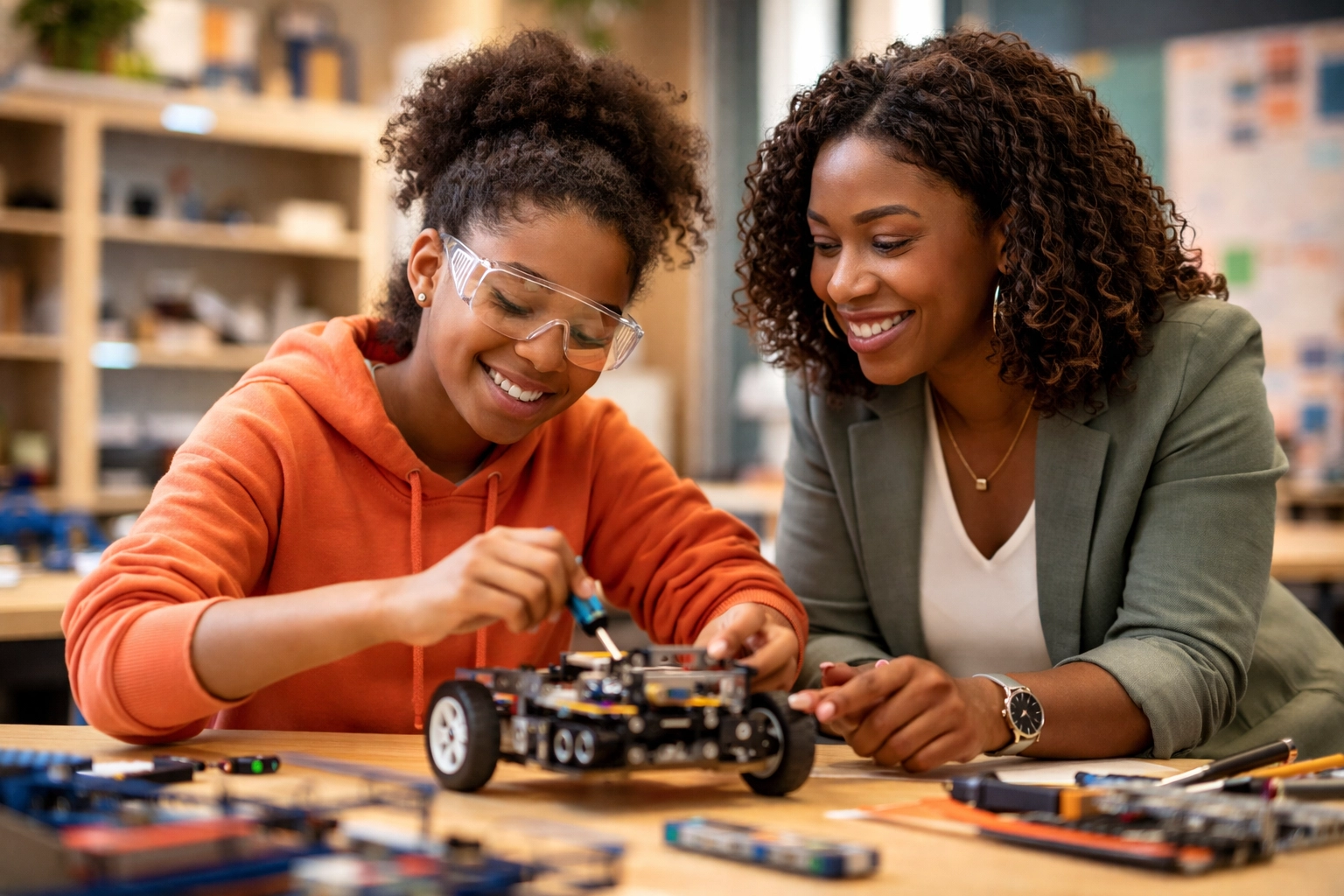
This isn't anti-technology: it's pro-learning. It's recognizing that screens are tools, not replacements for genuine exploration and discovery. And when students do engage with technology, it's purposeful: adaptive scaffolds, real-time feedback, personalized pathways. AI serves as a co-pilot, not a substitute for human connection and hands-on experience.
At STEM Xposure Inc., every program includes tangible, interactive components. Science kits to take home. Lab experiences to remember. Projects that require collaboration, problem-solving, and creativity. Because confidence comes from competence: and competence comes from actually doing the work.
The Assignment: What This Means for You
So what does all this mean for parents, educators, community leaders, and anyone invested in the next generation?
Here's the assignment:
Demand more. Expect STEM education that's accessible, inclusive, and connected to real-world applications. If programs aren't meeting students where they are: physically and culturally: ask why not.
Get involved. Whether you're a professional who can mentor, a business that can partner, or a community member who can advocate, your involvement matters. This work doesn't happen in isolation.
Support organizations doing it right. Nonprofits like STEM Xposure Inc. are leading this transformation, but we can't do it alone. Financial support, volunteer time, and simply spreading the word all make a difference.
The future of STEM education isn't coming: it's here. It's mobile, inclusive, interdisciplinary, and unapologetically hands-on. It looks like a Skoolie pulling into a neighborhood that's never had access to a real lab. It looks like a girl learning the chemistry behind her skincare products and realizing she could one day formulate them herself. It looks like industry professionals sitting beside students, sharing paths they never knew existed.
This is the education our young people deserve. This is the education that builds confident, future-ready leaders who know they belong.
Forward is the only direction. Let's build the future( together.)
Comments